



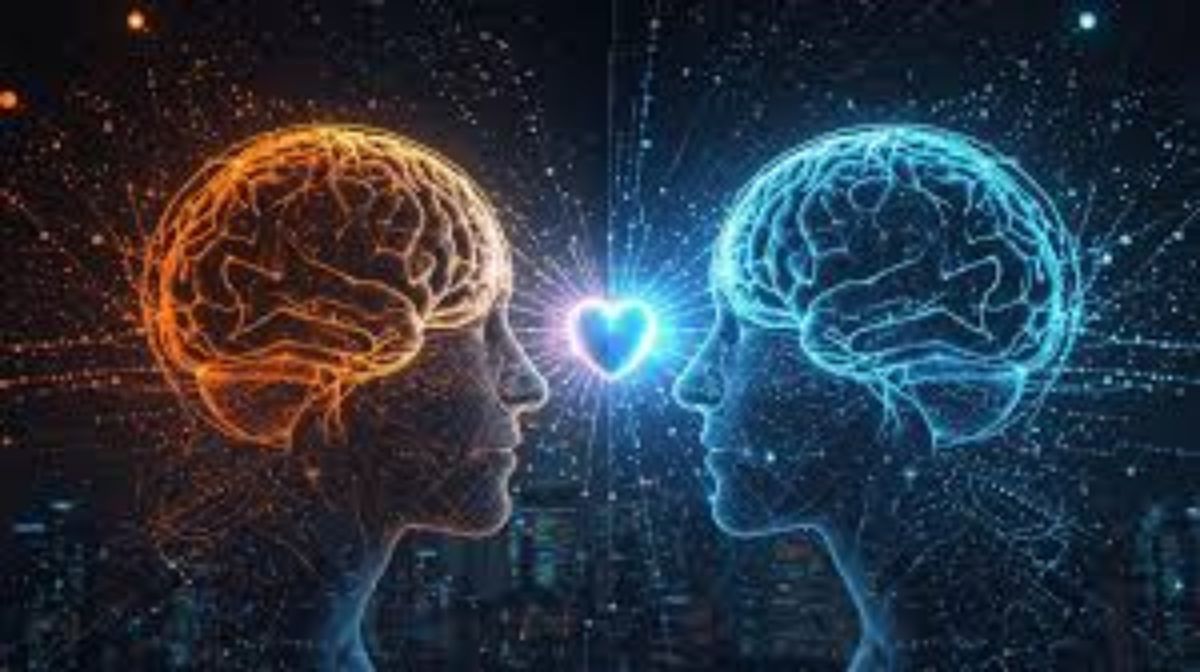
When the Machines Learn the Hard Skills

For the last century, our educational systems have been ruthlessly optimized to teach and test "hard skills." Mathematics, coding, accounting, data analysis, and language syntax have been the pillars of a successful career. But a monumental shift is occurring. Artificial Intelligence, specifically advanced Large Language Models and machine learning algorithms, are mastering these hard skills faster and more accurately than human beings ever could. An AI can now write complex Python code in seconds, balance a ledger flawlessly, and translate Mandarin to English instantly.
This begs a critical question for educators and students alike: If machines can do the hard skills, what is left for humans? The answer lies in the deeply complex, inherently biological realm of Emotional Intelligence (EQ).
The Future is Human
"The most valuable professional in the year 2030 will not be the one who can code the fastest, but the one who can empathize the deepest, lead with compassion, and navigate human conflict."
Redefining the Modern Curriculum
Emotional intelligence encompasses self-awareness, self-regulation, motivation, empathy, and social skills. Historically, schools considered these "soft skills" to be byproducts of socialization, expecting students to just naturally pick them up during recess or group projects. This passive approach is no longer viable. EQ must become a core, rigorously taught subject, integrated into every layer of digital and physical education.

Using Technology to Teach Empathy
Ironically, technology is providing some of the best tools to teach human empathy. Virtual Reality (VR) is emerging as an incredible "empathy machine." Medical students can put on a VR headset and experience a hospital visit from the perspective of an elderly patient with macular degeneration and hearing loss. This immersive role-reversal triggers a profound emotional understanding that a textbook description simply cannot achieve.
Similarly, corporate training is using branching AI simulations where managers must practice having difficult conversations—like firing an employee or delivering bad performance reviews. The virtual avatar reacts to the manager's tone and choice of words, allowing the user to practice high-stress emotional regulation in a safe, repeatable environment.
Conclusion
As AI continues its relentless march into the cognitive domain, we must stop trying to compete with machines on their terms. The future of education relies on doubling down on what makes us uniquely human. Cultivating Emotional Intelligence is no longer just a nice-to-have soft skill; it is the ultimate survival mechanism for the future workforce.
Leave your comment