




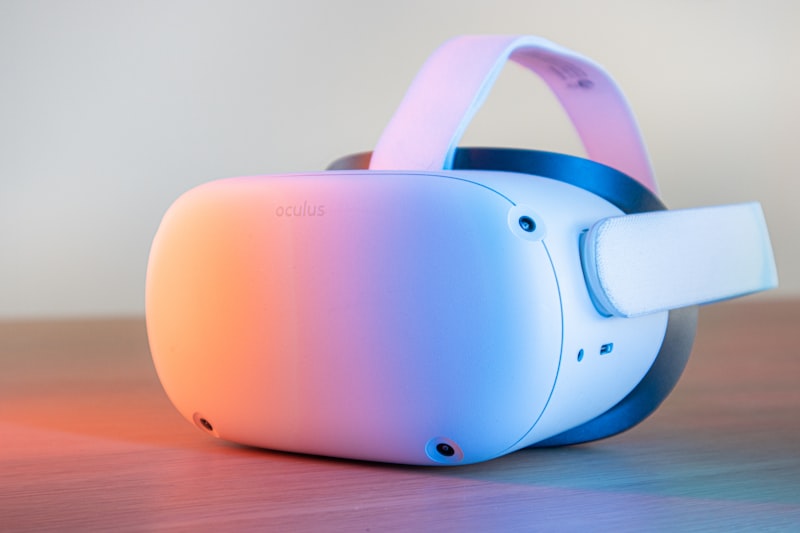
Beyond the Textbook: The 3D Classroom
Science, Technology, Engineering, and Mathematics (STEM) have always required a strong degree of spatial reasoning. For generations, students have struggled to visualize 3D molecular structures, the vastness of the solar system, or the complex geometry of architectural engineering using only flat, 2D textbooks. Today, Virtual Reality (VR) and Augmented Reality (AR) are entirely dismantling these limitations.
"We are no longer asking students to imagine the universe; we are handing them the universe to explore."

The Practical Applications of Virtual Labs
One of the most significant barriers in STEM education is the cost and safety of physical laboratories. High-end microscopes, volatile chemicals, and delicate engineering tools are expensive to maintain. VR labs provide a high-fidelity, risk-free environment. If a chemistry student mixes the wrong compounds in a VR lab, the virtual beaker shatters, the lesson is learned, but no one is harmed, and zero materials are wasted.
Key Benefits of Immersive STEM Learning:
- Unprecedented Engagement: Gamified 3D environments hold attention spans significantly longer than traditional lectures.
- Mistake-Driven Learning: Students can repeat virtual surgeries or engineering builds endlessly until they achieve mastery.
- Abstract Visualization: Seeing magnetic fields or the flow of electrons in AR makes invisible concepts instantly comprehensible.
As the hardware becomes lighter, cheaper, and more accessible, we are heading towards a future where every school, regardless of its budget, can offer its students world-class, infinite laboratory experiences.
Leave your comment