



The Great EdTech Debate
When educational institutions and corporate trainers design an online course, they are immediately faced with a foundational architectural decision: Should the learning happen in real-time, or should it be self-paced? This is the debate between Synchronous and Asynchronous learning. For years, educators treated these as mutually exclusive options. However, as e-learning matures, we are discovering that the most powerful educational experiences do not choose one over the other; they masterfully weave both into a unified hybrid curriculum.

The Anatomy of Synchronous Learning
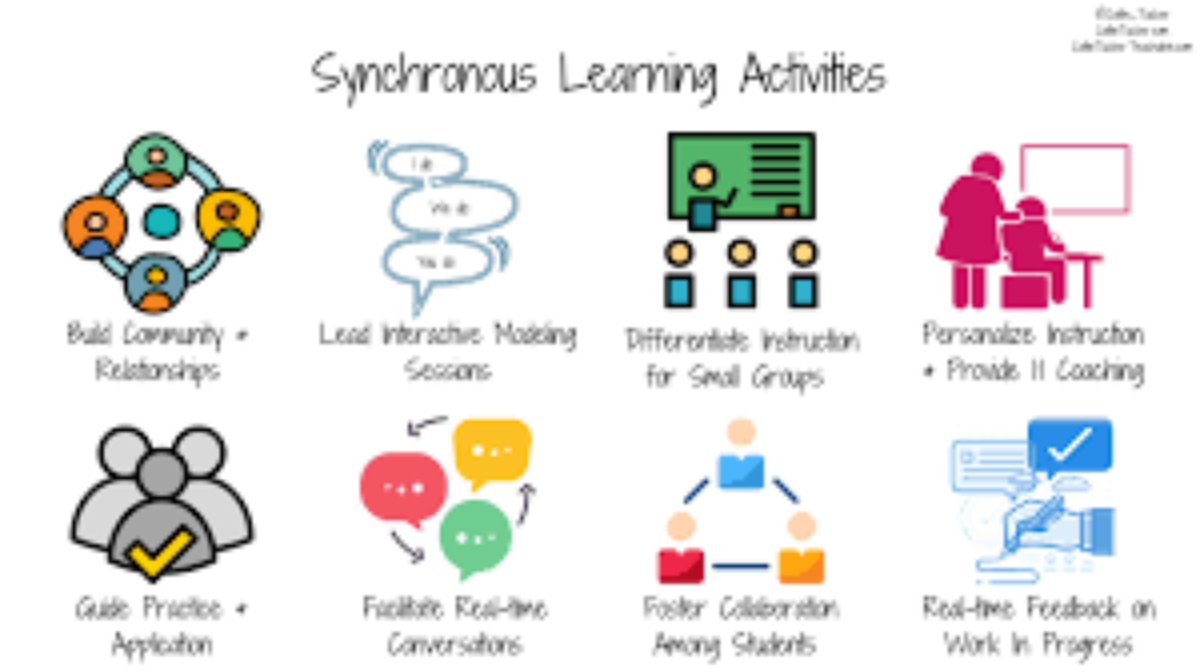
Synchronous learning occurs when the instructor and the learners are engaged in the educational process at the exact same time. Think live Zoom webinars, scheduled virtual classrooms, and real-time chat debates. The primary advantage here is immediacy. If a student misunderstands a complex physics formula, they can raise their virtual hand and get an explanation instantly. It also provides a structured schedule, which is critical for learners who struggle with procrastination.
However, synchronous learning has severe drawbacks. It is entirely inflexible, causing major issues for international students in different time zones or adult learners balancing full-time jobs and childcare. Furthermore, it often leads to "screen fatigue" and forces everyone to learn at the pace of the average student, boring the advanced learners and leaving the struggling ones behind.
The Freedom of Asynchronous Learning
Asynchronous learning is the ultimate expression of educational freedom. It relies on pre-recorded video lectures, reading assignments, interactive modules, and discussion boards. Students log in and consume the material whenever and wherever it suits them.
This method respects the individual's cognitive rhythm. A night owl can tackle a tough coding assignment at 2:00 AM, pausing and rewinding the video tutorial as many times as necessary without feeling judged. The downside? Isolation. Without the real-time energy of a class, students require massive amounts of intrinsic motivation. Dropout rates in purely asynchronous courses (like many early MOOCs) are notoriously high due to this lack of human connection.
The Hybrid Masterpiece: A Comparative Strategy
| Learning Objective | Best Delivery Method | Why? |
|---|---|---|
| Knowledge Transfer (Theory) | Asynchronous | Students can read texts and watch videos at their own pace. |
| Collaborative Problem Solving | Synchronous | Requires real-time debate, brainstorming, and immediate feedback. |
| Software Navigation / Tutorials | Asynchronous | Allows pausing and rewinding while practicing on another screen. |
| Mentorship & Emotional Support | Synchronous | Human empathy requires vocal tone, facial expressions, and live connection. |
Conclusion: The Best of Both Worlds
The ultimate course design uses the "Flipped" approach. You offload all standard knowledge transfer to high-quality asynchronous modules. Then, you reserve the precious, expensive synchronous time (live video calls) strictly for high-value interactions: debating case studies, group projects, and Q&A sessions. By finding this perfect blend, educators can deliver a course that is both deeply flexible and profoundly engaging.
Leave your comment